The Costly Courier Mistake That Can Delay Your Canadian Visa
Learn IRCC’s 30-day rule, VAC submission steps, and how to avoid costly courier mistakes that could delay your trip.
Key Takeaways
Key takeaways
- You have 30 days to act: Once IRCC sends your passport request, you have 30 days to submit your passport.
- Wait for the request: IRCC tells applicants not to submit a passport until they receive a passport request letter or email, and to include a copy of that request.
- Submission methods vary by centre: Depending on the Visa Application Centre, you may submit your passport in person, by mail, or by courier, so check your centre's website first.
- Returns take time: For passports mailed to IRCC from within Canada, IRCC aims to return them within 10 business days of receiving them, plus mailing time.
- The most common mistake: Applicants treat the passport request as a formality and improvise the delivery. An unrecognized courier or a missing document can bounce your passport back and cost you days you may not have.
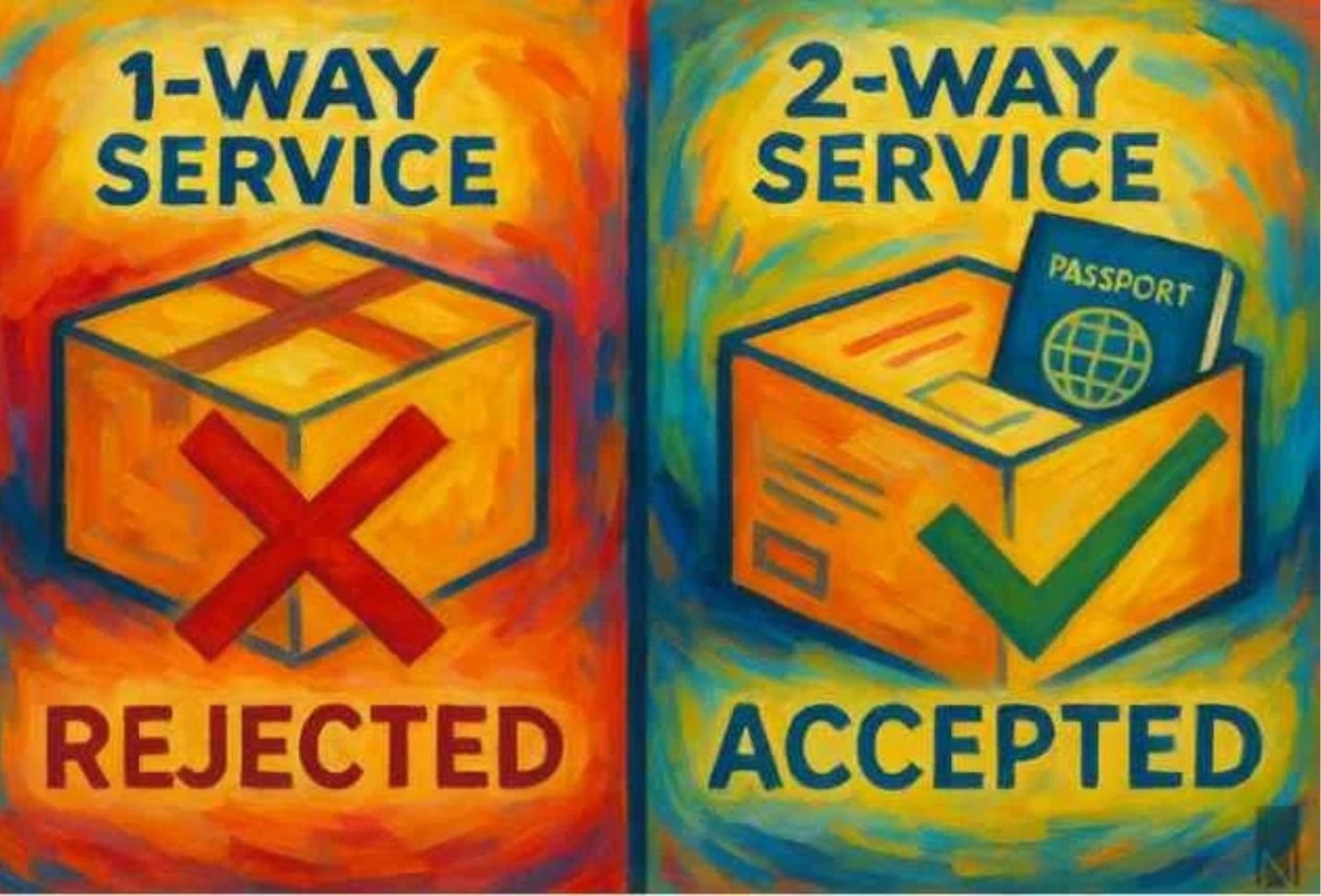
The client didn't follow my two-way courier instructions. She used a private courier that the Visa Application Centre didn't recognize, so it did not proceed with her passport stamping request. This article explains what a passport request means, how IRCC and VFS Global expect you to submit your passport, and how to avoid the detour that nearly cost my client her trip.
This article provides general information only and does not constitute legal advice.
What Does a Passport Request Letter Mean for My Canadian Visa?
A passport request letter, sometimes called a PPR, is one of the most exciting moments in the process. IRCC sends it when it is ready to place the visa counterfoil in your passport, which usually means it has made a positive decision on your application.
From that moment, the clock starts again. IRCC gives you 30 days to submit your passport, and your passport must be valid for your entire stay in Canada with at least one blank page. If you plan to travel for meetings or a conference, every day you lose here comes straight out of your buffer before departure.
How Do I Submit My Passport for a Canadian Visa?
For applicants outside Canada, IRCC directs most passport submissions through a Visa Application Centre. Canada's centres are operated by VFS Global, and each one sets the methods it accepts. Depending on your centre, you can submit:
- In person at the Visa Application Centre
- By mail, where your local centre accepts it
- By courier, using the courier service your centre offers or accepts
According to IRCC, your submission to a Visa Application Centre should include:
- Your passport
- A copy of your passport request letter or email
- The centre's fees, such as passport transmission fees
- Your contact details
- The centre's consent forms
Some locations ask for extra items, such as a return waybill, so always read your local centre's instructions before you send anything.
Why Do I Recommend the VFS Two-Way Courier?
When a client receives a passport request, I give the same instruction every time: use the VFS two-way courier service. Two-way means the courier collects your passport and delivers it back to you after stamping, all within the VFS system. In my experience, this route:
- Is recognized by the Visa Application Centre
- Keeps the process simple, with one provider handling both directions
- Moves quickly and reliably
- Usually returns passports to my clients within one to two weeks
VFS Global's websites do mention that applicants may use other couriers in some locations. Still, across my clients, those who follow the official two-way route have not run into problems at this stage.
What Happened When My Client Used Her Own Courier?
Instead of the two-way service, this client chose a one-way private courier that her Visa Application Centre did not recognize. The centre did not process her stamping request through that courier. Instead, it required her to book an appointment and submit her passport in person.
That had never happened before with any of my clients who used the two-way courier. To fix it, she went back and used the recommended service. By then, she had lost time, the process felt far more stressful, and a simple task had become complicated.
Happily, she still made it to her destination on time. Not every applicant has that much margin, especially when a business trip is booked close to the approval date.
How Long Does It Take to Get My Passport Back?
Timing depends on where and how you submit. For applicants inside Canada who mail their passports to IRCC, IRCC aims to return them within 10 business days of receipt, plus mailing time. Outside Canada, timing depends on your Visa Application Centre, the visa office, and courier transit. In my experience, the two-way courier route typically takes one to two weeks.
IRCC also advises applicants inside Canada not to book travel outside the country until their passport comes back. The same caution makes sense for business travellers abroad: confirm your stamped passport is in hand, or at least tracked and on its way, before you lock in non-refundable plans.
To avoid delays at this final stage:
- Read your passport request and your local centre's instructions the day they arrive
- Use the courier service your Visa Application Centre offers or recognizes, ideally a two-way service
- Include a copy of the passport request and every form and fee the centre lists
- Confirm your passport is valid for your whole stay and has a blank page
- Track your shipment in both directions and keep every receipt
For a full picture of how each stage affects your timeline, see our guide to Canadian business visitor visa processing times.
FAQs
How long do I have to submit my passport after a passport request?
IRCC gives you 30 days from the request to submit your passport. In family or group applications, each traveller needs their own request, and you may need to send passports separately to meet the deadline.
Does a passport request mean my Canadian visa is approved?
It usually signals a positive decision, because IRCC requests your passport when it is ready to place the visa in it. However, the visa is not final until the counterfoil is in your passport, so follow every instruction carefully until you have it back.
Can I use any courier to send my passport to VFS?
Not always. Accepted methods vary by Visa Application Centre, and some centres will not process passports sent through couriers they do not recognize. Check your local centre's website and, where possible, use its own courier service.
Can I send my passport before IRCC asks for it?
No. IRCC tells applicants not to submit their passport until they receive a passport request letter or email. Sending it early, or without a copy of the request, causes processing delays.
Keep It Simple at the Finish Line
Once IRCC approves your visa, follow the trusted process. Use the courier your Visa Application Centre offers or recognizes, include everything it asks for, and track your passport both ways. A two-way service may cost a little more upfront, but it can save you time, stress, and a missed trip. Timelines in this article reflect current IRCC guidance and my own experience, not guarantees. If you want a licensed professional to guide your Canadian business visitor visa from application to stamped passport, Newflow Immigration can help.
Disclaimer: This article offers general information and does not constitute legal advice. Reading it does not create a consultant-client relationship. Client details have been kept general to protect confidentiality. Visa Application Centre procedures vary by location and can change, so always confirm your local centre's current instructions.
Related articles

The Hidden IRCC Form Error With Serious Consequences
One “No” on IMM 5257 led to a Canadian visa refusal under IRPA 41(a). Discover what IRCC can see and how disclosing past refusals protects you.

The Truth About Rushing a Canadian Business Visa Application
Urgency won't speed up a Canadian business visitor visa. Discover the 3 key processing timelines, what you can control, and how to avoid costly delays.
Missed Your 30-Day Biometrics Deadline? Here’s What Happens
Missing IRCC’s 30-day biometrics deadline can derail a Canadian business visa. Learn the rules, travel options, and key steps to avoid costly delays.